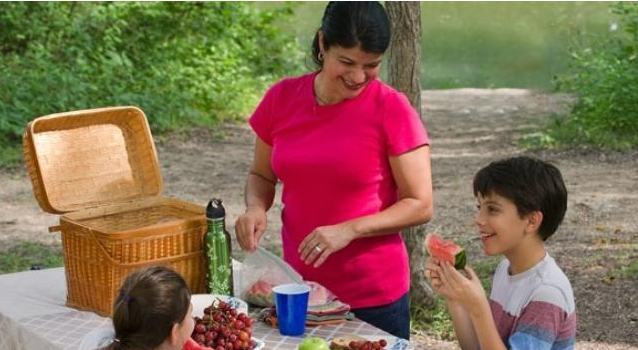
Picnics are a great chance to bring family and friends together. However, the excitement of a picnic can distract us from ensuring that the food being served is safe to eat. Make sure your picnic has a happy ending by keeping food safety in mind while packing, storing, and preparing the delicious summer foods for a picnic. Picnickers with lower immune systems such as young children, older adults, pregnant women, and immunocompromised individuals are at greatest risk.
The best way to start preparing for a picnic is to make a list of the foods and other items you might need such as napkins, plates, and utensils. Include hand sanitizer and/or soap and water on the list, as not all picnic areas have a faucet to wash hands prior to eating. Everyone in the group should wash their hands before preparing, serving, and eating the food. This is a huge step in helping to prevent the spread of bacteria between individuals. Also bring a thermometer to check the proper cooking temperatures of all meat, poultry, or fish as it is grilled. Below is a guide to check the temperature of grilled items to make sure that they are safe to eat:
If salads or pre-made dishes are on your list, make sure that you keep them at the proper temperature (below 40 degrees Fahrenheit) at all times. This means storing them in the refrigerator after they are made and then transferring them into a cooler with ice or icepacks right before traveling to the picnic destination. Fruits or vegetables that will be cut/prepared at the picnic location should be washed, dried, and stored in a clean container or bag prior to the trip. Keep the cooler closed until you are ready to serve or prepare the foods. Any food that is left out of the cooler for longer than an hour on a 90 degree Fahrenheit day should be discarded due to the risk of it making someone sick. Likewise, ready-to-eat hot items should be thrown away if they sit out at 90 degrees Fahrenheit or higher for longer than one hour. The germs that cause food-borne illness multiply most rapidly between 40 and 140 degrees Fahrenheit.
Also prevent cross-contamination between raw and ready-to-eat foods. If you are marinating meats ahead of time, place them on the bottom shelf of the refrigerator so that the juice cannot drip onto any of the other items. Do not reuse the marinade. These foods should be stored in a cooler, separate from the ready-to-eat foods, at a temperature below 40 degrees Fahrenheit. When cooking the food, make sure to not reuse the plate that held to raw or uncooked items unless it is sanitized before the cooked items are placed on it; not following this precaution can expose the cooked food to harmful bacteria. Also remember to use different utensils before cooking than after cooking.
By practicing safe food handling procedures at picnics, you can relax, confident that the food you are serving to yourself and others will not make anyone sick. Visit the FDA Consumer Resources webpage for more information on food safety.
For more information on food safety, wellness, and nutrition please contact the Family and Consumer Sciences Agent at 910-997-8255. The Richmond County Cooperative Extension’s goal is to provide the residents of the community with research-based knowledge.