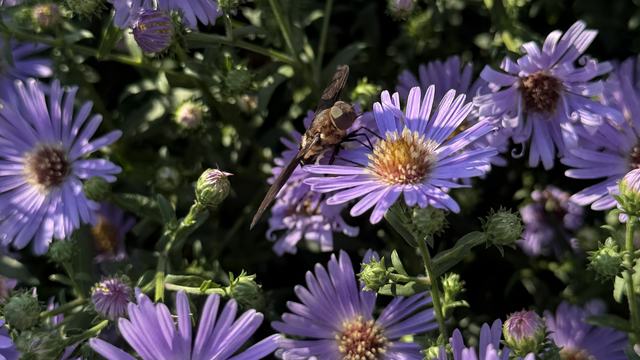
Asters are the rockstars of fall! Starting to bloom in late August and continuing through November, they come in purple, blue, pink, and white. The origin of this flower’s name is Greek for ‘star’, referring to the flower’s appearance. Asters come in different growing habits from erect to mounding and can range from 6 inches to 8 feet tall.
One of the best reasons to plant asters is their bloom time. When many summer blooming perennials are fading, asters provide an important source of nectar for bees, butterflies, and other pollinators. Asters also serve as host plants for the caterpillars of many moths and butterflies, including the Pearl Crescent Butterfly. The caterpillars feed on the leaves of the asters in the Symphyotrichum genus, which include the New England Aster, Frost Aster, and Aromatic Aster. In addition to providing nectar and forage, their seeds provide a food source to songbirds and small mammals.
Every year since 1982, the North Carolina Botanical Garden in co-sponsorship with the Garden Club of North Carolina, Inc., chooses a Wildflower of the Year. The goal is to promote the use and conservation of native southeastern plants in home gardens. The 2026 North Carolina Wildflower of the Year is the big-headed aster (Symphyotrichum grandiflorum). It earned its spot this year because of its striking large, violet blooms with golden centers. It is a standout in a fall garden, blooming from September to November. This perennial is native to eastern and coastal Virginia and North Carolina. It is commonly found on powerline right-of-ways, roadsides, forest edges, and dry woodlands. It prefers full sun, but can tolerate light shade and grows in both dry and moist soils.
Asters are low maintenance perennials. Many can be pinched or cut back in early summer to encourage shorter, bushier plants with more branching and flowers. For example, the big-headed aster plants can get up to 4 feet tall but can be cut back halfway in late June for more compact growth, increased branching, and more flowers. Once established, plants can be divided and moved around the garden or given to friends. Although it can be tempting to cut asters back as soon as they finish flowering, leaving the stems and seedheads through the winter provides food and shelter for wildlife and can add winter interest to the garden.
Other asters to consider adding to your garden:
- Clasping Aster (Symphyotrichum patens): 2-3 ft; blue-purple flowers; blooms Aug-Nov; sun to part shade; dry to medium moisture soil; erect, arching
- New England Aster (Symphyotrichum novae-angliae): 3-6 ft; bright purple, pink, or blue flowers; blooms Sep-Oct; full sun; moist, rich, well-drained soil; erect, clumping
- Frost Aster (Symphyotrichum pilosum): 2 -4 ft; white to pale blue flowers; blooms Sept-Nov; full sun; dry to medium-wet, well-drained soils; erect, clumping
- Aromatic aster (Symphyotrichum oblongifolium): 1-3 ft; purple flowers; blooms late Sept-Nov; full sun; dry to medium-wet, well-drained soils; mounding, dense; aromatic when crushed
- Smooth aster (Symphyotrichum laeve): 2 -4 ft; light blue to purple flowers; blooms Sept-Oct; dry to medium-wet, well-drained soils; erect, clumping, spreading
- Blue wood aster (Symphyotrichum cordifolium): 2-4 ft; heart shaped leaves; pale blue to lavender flowers; blooms Sept-Oct; full sun to part shade; moist, well-drained soils; erect, arching
- Georgia aster (Symphyotrichum georgianum): 1.5-3 ft; deep purple flowers; blooms Oct-Nov; full sun; dry to medium-well, well-drained soils; erect, clumping
Whether you have a sunny perennial border, a pollinator garden, or a dry area, there is likely an aster that will fit right in. Adding native asters extends your garden's color into fall while providing valuable resources for pollinators and wildlife.For more information about growing asters or supporting pollinators, contact North Carolina Cooperative Extension- Richmond County Center at (910) 997-8255. To learn more about workshops and other educational opportunities, visit our Facebook and check out the Events page on our website.