Sandhill Fall Blooms

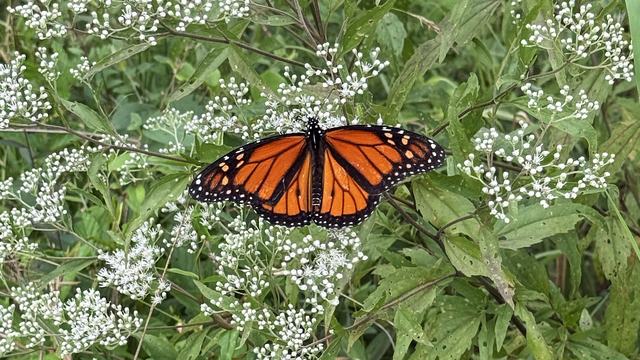
Monarch Butterfly on latebonset

This summer was one of the hottest on record in many parts of North Carolina. With the cooler fall temperatures on the horizon, I hope you will get to spend more time in your garden and in nature enjoying the fall blooming native plants. These plants provide critical nectar and pollen sources for our native pollinators as they complete their migration or forage to build up vital winter reserves. Beyond their ecological value, fall blooming native plants add rich color and dramatic shapes to the landscape.

I encourage you to take a walk through our local municipal greenspaces, a friend’s property, or public lands. As you explore, keep an eye out for these eight native plants. Some may be familiar, while others may be plants you’ve walked past many times without noticing.
Bonesets

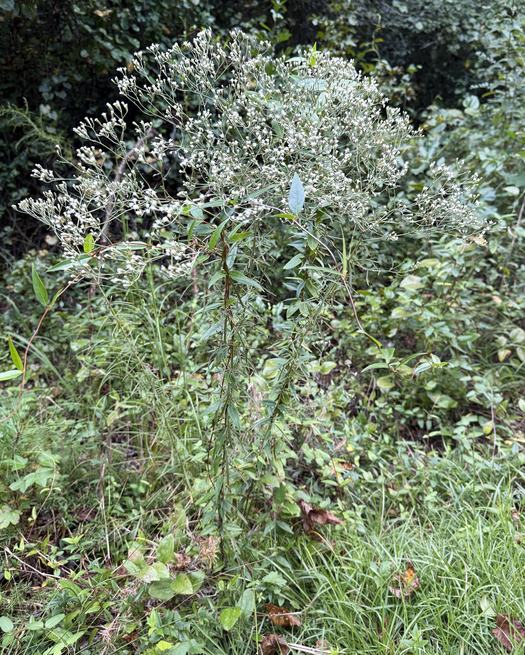
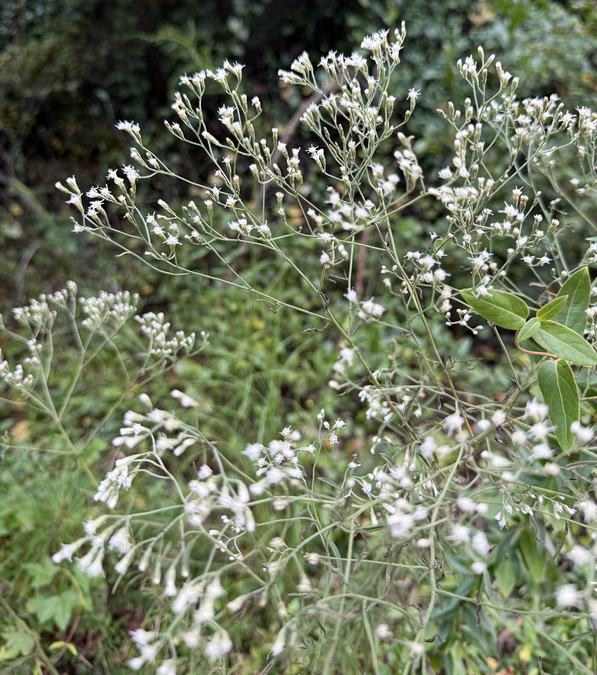
  • Hyssopleaf Boneset (Eupatorium hyssopifolium): Features dense clusters of small, fuzzy white flowers and distinctive whorls of three to four narrow leaves. It thrives in sunny, dry locations across North Carolina, excluding higher mountain elevations. It is often found along roadsides, open fields, and rocky slopes.
Hyssopleaf Boneset
Hyssopleaf Boneset
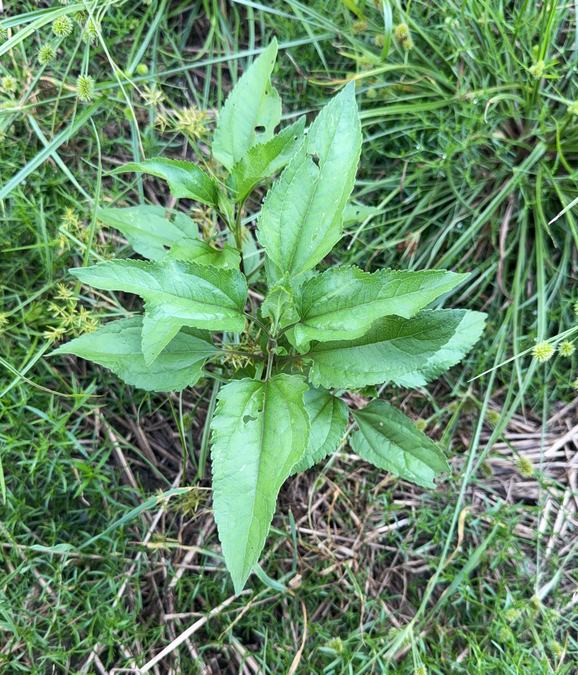
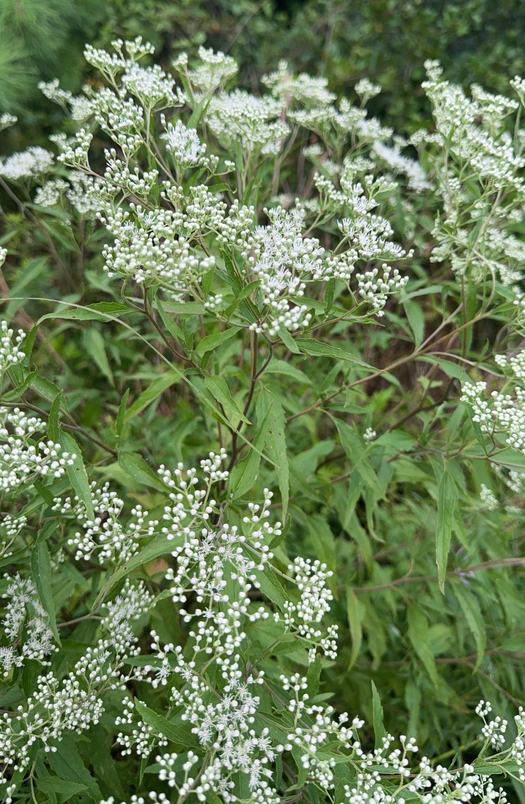
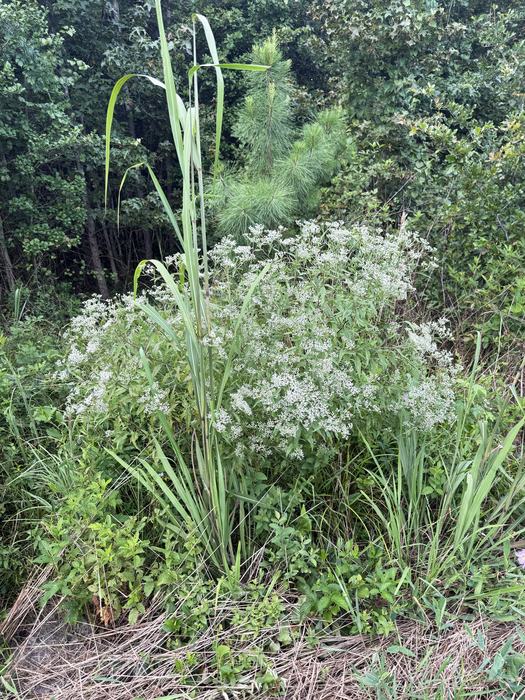
  • Late Boneset (Eupatorium serotinum): A tall, branching perennial with opposite, lance shaped leaves with toothed margins and flat-topped clusters of small white blooms. Widespread throughout North Carolina in full sun to part shade, especially on moist slopes, damp meadows, and clearings.
Late Boneset before bloom
White flowers on late boneset
Late boneset in full bloom

Joe-Pye-Weeds

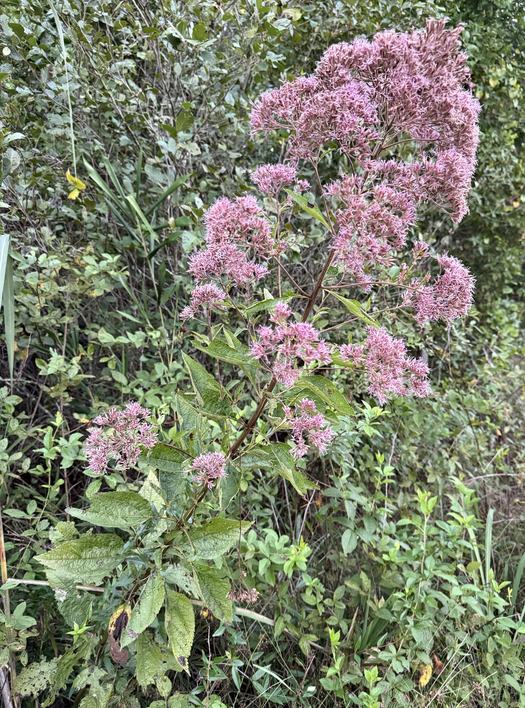
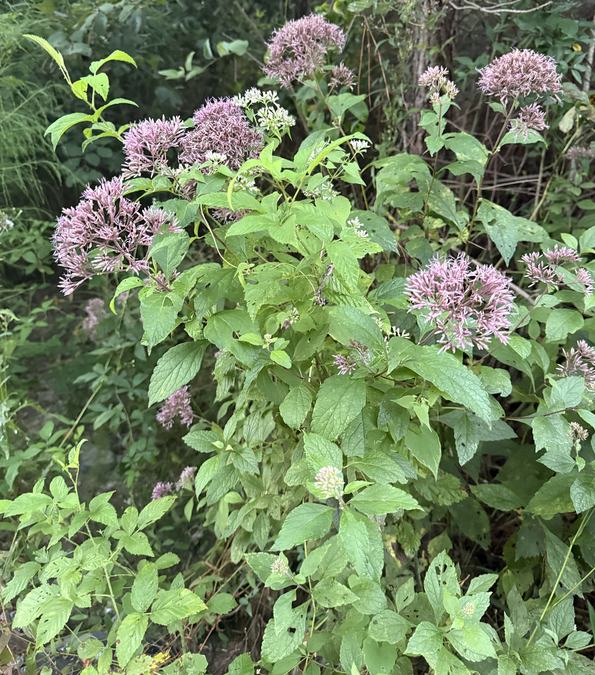
  • Hollow-stem Joe-pye-weed (Eutrochium fistulosum): Growing to six to nine feet tall with distinct hollow stems, this plant features whorls of five to seven leaves and dome shaped pinkish purple blooms. Coom in the Mountains and Piedmont, and scattered across the Coastal Plain. Found in freshwater marshes, swamp forests, creek and river margins, bottomlands, wet meadows, and roadside ditches.
Hollow stem Joe-pye-weed in full bloom
  • Coastal Joe-pye-weed (Eutrochium dubium): Standing one and a half to three feet tall this Joe-pye grows about 1.5 to 3 feet tall. This species has sharply toothed leaves with three main veins and pinkish purple blooms. Found primarily in wet freshwater marshes, river floodplains, and damp ditches across the Sandhills and Coastal Plain.
Coastal Joe-pye-weed in full bloom

Goldenrods

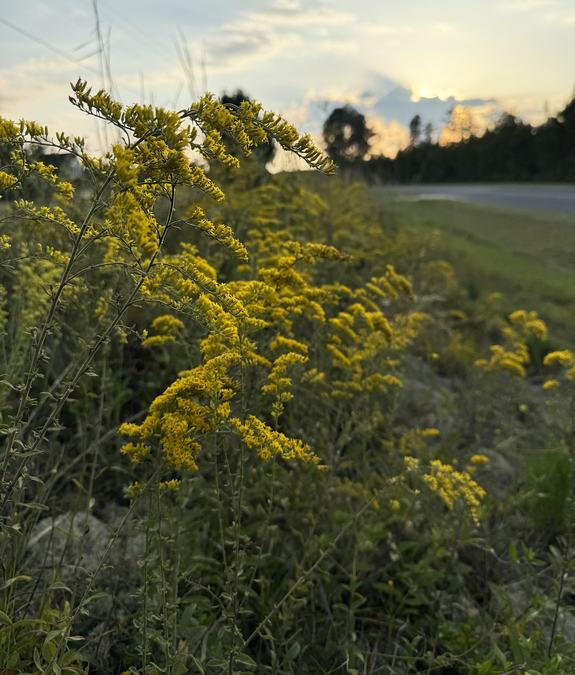
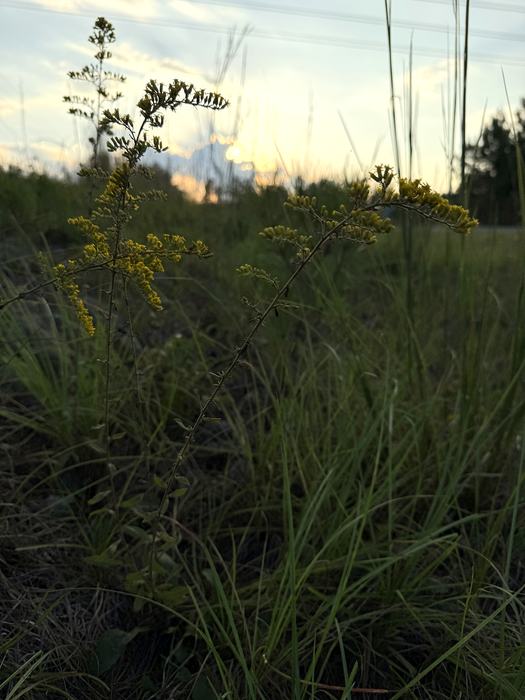
  • Field Goldenrod (Solidago nemoralis): This is a compact goldenrod species growing one to two feet tall with hairy stems and triangular, bright golden flower clusters. Commonly found in dry open woodlands, fields, pastures, clearings, and roadsides across most of North Carolina.
Solidago nemoralis
Solidago nemoralis
solidago nemoralis
  • Tall Goldenrod (Solidago altissima): One of the tallest goldenrods that reaches three to six feet in height with lance shaped leaves with toothed margins. Flowers are bright yellow. Abundant statewide in dry to wet fields, meadows, and along roadsides.

Sunflowers

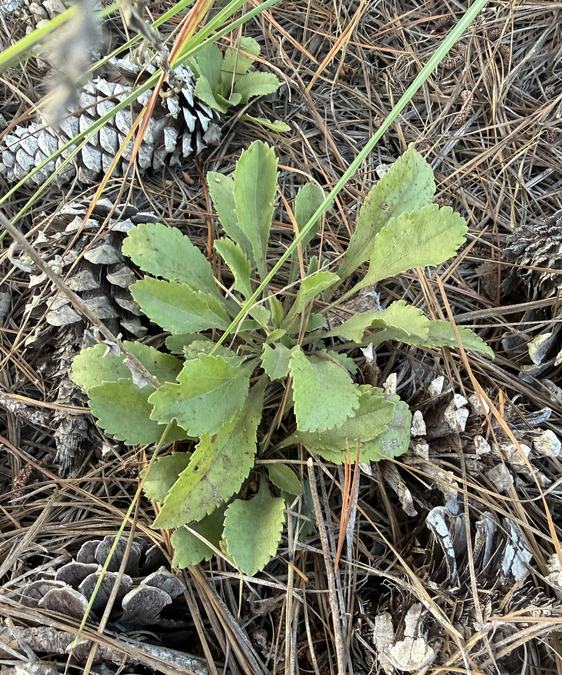
  • Purpledisk sunflower (Helianthus atrorubens): This sunflower typically grows 2 to 5.5 feet tall and features daisy like flowers that are bright yellow and two inches in diameter. The yellow petals surround a brownish purple center. Common in dry sandy, clay, or rocky soils in open forests and clearings.
  • Swamp Sunflower (Helianthus angustifolius): Growing three to six feet tall with slender, roughly textured leaves and muli-branched yellow flowers with brownish purple centers. Found in moist to wet meadows, marshes, savannas, roadside ditches, and damp powerlines throughout the Coastal Plain, Sandhills, and lower Piedmont.